
Travelling with children after a flight can be stressful, especially when you are carrying luggage, dealing with tired children, and trying to arrange safe transportation. One of the first questions parents often ask is whether a Taxi From Melbourne Airport will have a child seat ready for their baby or young child.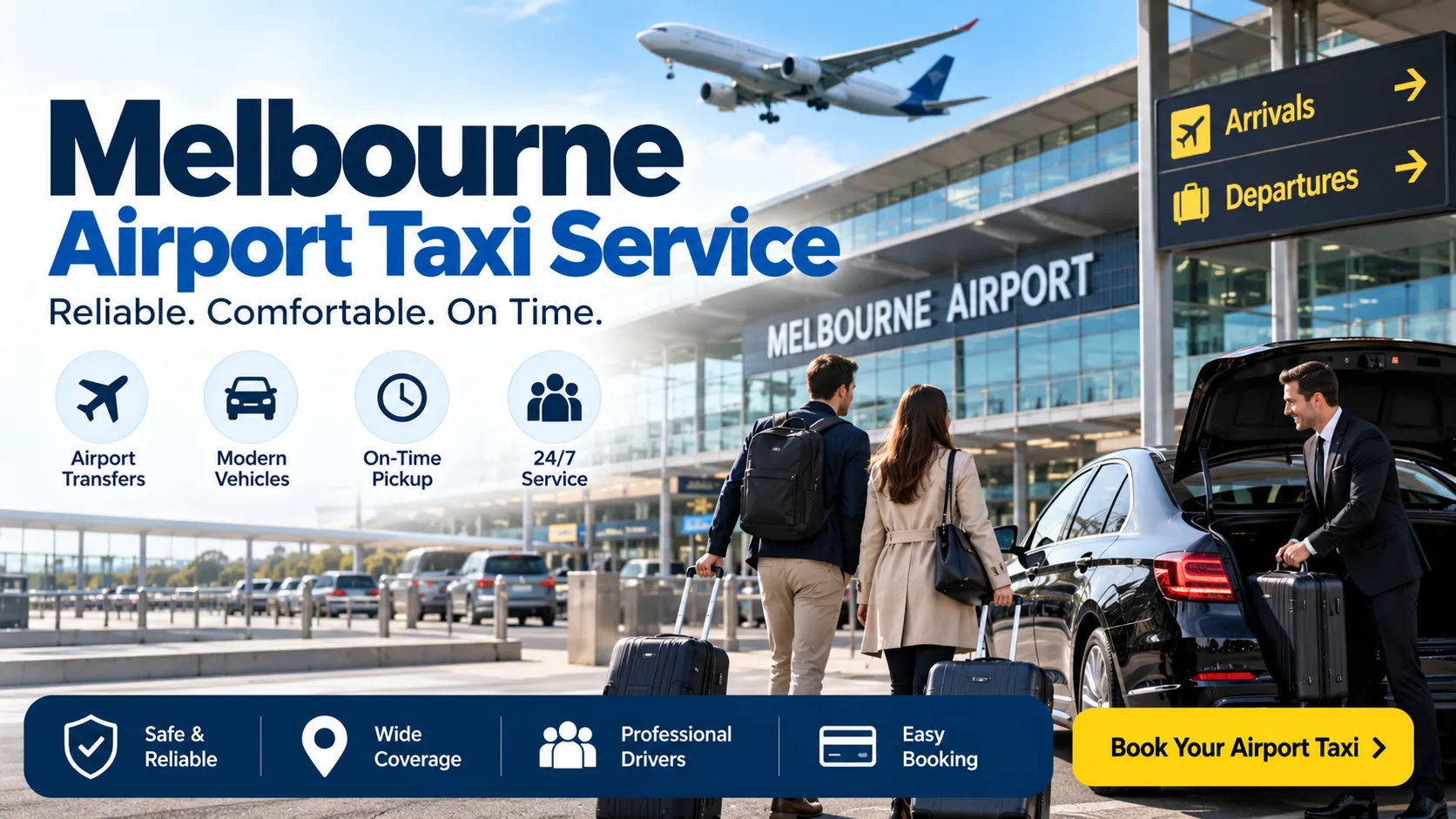
The short answer is that you should not assume every taxi will provide a child seat. In Victoria, taxis have specific exemptions from the child restraint rules that apply to private vehicles. Taxi drivers are not generally required to provide a child restraint or booster seat for passengers. However, taxis must have at least one anchorage point if a passenger wants to use their own child restraint.
This makes planning particularly important when travelling from Melbourne Airport with a baby or young child. Understanding the rules before you arrive can help you avoid confusion at the taxi rank and make the journey much more comfortable.
Are Child Seats Provided in Melbourne Airport Taxis?
A common mistake is assuming that every taxi at Melbourne Airport comes equipped with a baby seat or booster seat. That is not necessarily the case.
According to Transport Victoria, taxi drivers in Victoria do not have to provide child restraints or booster seats for customers. Taxis are exempt from some of the child restraint requirements that apply to private cars.
This means you could arrive at Melbourne Airport, walk to the official taxi rank, and find a perfectly legitimate taxi that does not have a child seat.
That does not mean children can simply travel without any form of restraint. Different rules apply to children depending on their age.
For children aged one year and over, if a child restraint or booster seat is not available in a taxi, the child must travel in their own seating position using a seatbelt. Children under one year old must travel in the back seat but may be carried by an accompanying adult when travelling in a taxi.
However, parents should understand the difference between what is legally permitted and what is safest.
A child seat specifically designed for the child's age and size generally offers much better protection than relying only on an adult seatbelt.
Why You Should Not Assume a Taxi Has a Child Seat
Taxi fleets are made up of different vehicles and operators. A particular taxi may have a child restraint because the operator chooses to provide one, while another taxi may not.
There is also no guarantee that the available restraint will be the right type or size for your child.
For example, a baby may require a rear-facing restraint, while an older child may need a forward-facing restraint or booster seat. Transport Victoria recommends choosing a restraint based on both the child's age and size and keeping children in their current restraint until they outgrow it.
So, if you are travelling with a six-month-old baby, you should not simply assume that a standard booster seat will be suitable.
The safest approach is to confirm your transportation arrangements before travelling.
What Are the Child Seat Rules in Victoria?
Victoria has detailed rules covering child restraints in private vehicles. These rules are different from the special rules that apply to taxis.
For private cars, babies from birth to six months must use a rear-facing child restraint with an inbuilt harness.
Children from seven months to under four years must use an appropriate child restraint.
Children aged four to under seven years must use a suitable child restraint or booster seat.
Children aged seven to 16 years can use an appropriate booster seat or adult seatbelt, depending on their size. Transport Victoria also recommends that children continue using a booster until the seatbelt fits properly.
The important point is that these private-car requirements should not automatically be applied to taxis.
Victoria specifically provides taxi exemptions.
That is why parents sometimes find information online that appears contradictory. One website may say that a young child must use a child restraint, while another explains the taxi exemption. Both statements can be correct when referring to different types of vehicles.
What Happens With Babies Under One Year?
Travelling with an infant requires extra planning.
Under Victoria's taxi rules, a baby under one year old must travel in the back seat of a taxi. If there is no child restraint available, the baby can be carried by the accompanying adult.
Even though this is permitted under the taxi exemption, many parents may prefer not to rely on this arrangement.
A proper rear-facing infant restraint is designed to provide protection for a baby's head, neck and body during a collision.
Transport Victoria recommends keeping babies and young children in suitable restraints and explains that rear-facing restraints are designed specifically to support a young child's body during a crash.
For a family arriving after a long flight, carrying an infant in your arms during a taxi journey may also be uncomfortable, particularly if the journey from the airport to your accommodation is lengthy.
This is one reason it is worth arranging a suitable child restraint before you travel.
What About Children Over One Year Old?
For children aged one year and over, the taxi rules are different.
If a child restraint or booster seat is not available, the child must sit in their own seat and use the available seatbelt.
Again, this is a legal requirement under the taxi-specific rules, but parents should consider safety as well as legality.
A young child may be too small for an adult seatbelt to fit correctly.
A poorly positioned seatbelt can ride across the child's neck or stomach rather than sitting across the shoulder and low across the hips.
Transport Victoria recommends using a booster or appropriate child restraint until a child can pass the five-step test for safe adult seatbelt use. Most children do not pass this test until around 10 to 12 years of age.
Therefore, if your child still normally uses a booster in your own car, it makes sense to consider how you will provide similar protection during your airport transfer.
Can You Bring Your Own Child Seat?
Yes, bringing your own child restraint is one of the most practical solutions for families.
Victoria's taxi rules require taxis to have at least one anchorage point if passengers want to bring and use their own child restraint.
However, parents should not assume that every restraint can be installed in every seating position.
The restraint must be suitable for the vehicle and installed according to the manufacturer's instructions.
Transport Victoria states that child restraints sold in Australia must meet the relevant Australian Standard, AS/NZS 1754. It also advises against using damaged restraints or restraints that are more than 10 years old.
If you are bringing your own seat, check its installation requirements before your trip.
It is much easier to discover a problem at home than while standing outside an airport terminal with several suitcases and an impatient child.
Can You Request a Taxi With a Child Seat?
Some taxi operators or private transfer companies may offer vehicles with child restraints, but availability can vary.
This is why parents should specifically ask about the type of restraint rather than simply asking whether a vehicle is "child friendly."
For example, you might need:
-
A rear-facing infant seat
-
A forward-facing child restraint
-
A booster seat
-
A particular restraint suitable for your child's height and weight
If you are booking transportation in advance, give the child's age and, where relevant, their approximate size.
Do not simply say that you need a "child seat."
The term can mean different things to different operators.
A booster seat intended for an older child is obviously not an appropriate replacement for a rear-facing infant restraint.
Taxi From Melbourne Airport vs Private Car
One reason this subject becomes confusing is that taxis and private cars do not follow exactly the same child restraint rules.
In a private vehicle, the driver has responsibility for ensuring that children under 16 are appropriately restrained according to Victorian road rules.
Taxis receive a specific exemption.
Rideshare vehicles and hire cars are different again. Transport Victoria states that rideshare vehicles such as Uber follow the same child restraint rules as private cars in Victoria.
This distinction matters when choosing airport transportation.
If you are comparing a traditional taxi with a rideshare service, do not assume the same child-seat rules apply to both.
Always check the requirements for the type of vehicle you are actually booking.
Are Taxi Ranks at Melbourne Airport Safe?
Melbourne Airport has designated taxi ranks near the terminals.
The airport advises passengers to use authorised taxis from designated taxi ranks rather than accepting offers from people approaching them inside or outside the terminals. It also recommends checking the accredited taxi service number displayed by the taxi and driver.
This is especially important when travelling with children.
After a long flight, it can be tempting to accept the first person offering transportation.
However, using the official taxi arrangements gives you a clearer way to identify an authorised taxi and reduces the risk of getting into an unverified vehicle.
Safety should come before convenience.
What Should Parents Ask Before Getting Into a Taxi?
If you are travelling with a baby or young child, ask a few simple questions before the journey begins.
First, ask whether the vehicle has a child restraint.
Second, ask what type of restraint it is.
Third, explain your child's age.
If you have your own child restraint, tell the driver that you would like to use it and ask where it can safely be installed.
You can also ask whether the vehicle has an appropriate anchorage point.
This conversation might take only a minute, but it can prevent a lot of uncertainty once the luggage is loaded.
How to Travel With a Child Seat From the Airport
Carrying a child seat through an airport can sound inconvenient, but many families find it worthwhile.
If you are travelling with your own restraint, consider how you will transport it through the terminal.
Some parents use a protective travel bag.
Others use a lightweight travel-friendly restraint designed for easier transportation.
Before purchasing anything, however, check that the restraint is legally approved for use in Australia.
Transport Victoria warns that child restraints purchased overseas may not meet Australian requirements and that restraints used in Australia must comply with the applicable Australian Standard.
A cheap seat bought for another country's safety standards is not necessarily a suitable choice for a trip to Melbourne.
What If You Have Several Children?
Families travelling with multiple children need additional planning.
Suppose you have a baby, a four-year-old and an eight-year-old.
Their needs can be very different.
The baby may need a rear-facing infant restraint.
The four-year-old may need a forward-facing restraint or booster.
The eight-year-old may still benefit from a booster if the adult seatbelt does not fit correctly.
Trying to arrange three different seating requirements after landing can be difficult.
For this reason, families with multiple young children may find a pre-booked transfer with confirmed child restraints more convenient than simply taking the first available taxi.
Is a Child Seat Legally Required in a Taxi?
This is one of the most important questions.
In Victoria, taxi drivers are not required to provide child restraints or booster seats. This is a specific exemption from the requirements applying to private vehicles.
However, the absence of a child seat does not mean that children have no safety requirements.
Children must still follow the taxi-specific rules regarding seating and restraint.
For children one year and older, when no child restraint or booster is available, they must sit in their own seat and use a seatbelt.
For babies under one year, the taxi rules allow them to travel in the back seat while being held by an accompanying adult when no child restraint is available.
Parents should understand these rules before making their travel plans.
Is a Child Seat Still the Better Choice?
In practical terms, yes.
A legal exemption does not automatically make travelling without a child restraint the safest option.
Child restraints are designed to accommodate children's smaller bodies and protect vulnerable areas during a crash.
Transport Victoria recommends using the appropriate restraint based on a child's size and keeping children in their restraint until they outgrow it.
If your child normally uses a child seat or booster at home, continuing that level of protection during an airport transfer is a sensible approach.
The fact that a taxi has an exemption should be viewed as a legal distinction, not as a recommendation to stop using a child restraint.
Tips for Booking Airport Transportation With Children
A little preparation can make the entire journey easier.
Confirm the Vehicle Type
Ask whether you are booking a taxi, rideshare vehicle, hire car or private transfer.
The child restraint rules can differ between these categories.
Give the Child's Age
Do not simply request a "family vehicle."
Tell the operator exactly how old the child is.
If necessary, also provide the child's approximate height and weight.
Ask About the Exact Restraint
Ask Taxi From Melbourne Airport the vehicle has a rear-facing seat, forward-facing seat or booster.
This avoids misunderstandings.
Bring Your Own Seat When Practical
If you already have a suitable Australian-approved child restraint, bringing it may provide greater certainty.
Confirm that the taxi has an anchorage point if your restraint requires one.
Keep Safety Ahead of Speed
Getting to your hotel five minutes faster is not worth taking unnecessary risks with a child.
Give yourself enough time to arrange suitable transportation.
Common Mistakes Parents Make
One of the most common mistakes is assuming that a taxi automatically includes a child seat.
Another is assuming that a "child seat" means the same thing for every age group.
Parents can also confuse taxi rules with private-car rules.
Some travellers assume that because a taxi is exempt, no restraint is ever necessary. That is also incorrect.
Another common mistake is leaving the transportation decision until arrival.
After a long flight, luggage collection, immigration and tired children can make even a simple taxi ride feel complicated.
Planning beforehand usually makes the process much easier.
What Is the Safest Option for a Family?
There is no single transportation solution that works perfectly for every family.
A family travelling with an older child may find a standard airport taxi perfectly practical.
A family with an infant may prefer to bring its own rear-facing restraint.
A larger family with several young children may prefer a pre-arranged airport transfer where the required restraints have been confirmed before arrival.
The important thing is to match the transportation arrangement with the child's actual needs.
Do not wait until you are standing beside the taxi to discover that the available vehicle does not have the restraint you expected.
Conclusion
So, does a Taxi From Melbourne Airport have a child seat?
Not necessarily. In Victoria, taxi drivers are not required to provide child restraints or booster seats, although taxis must have at least one anchorage point when passengers want to use their own child restraint.
The rules are different from those applying to private cars, which is why families can easily become confused.
Babies under one year old must travel in the back seat of a taxi and can be carried by an accompanying adult if no child restraint is available. Children aged one and over must have their own seating position and use a seatbelt when a child restraint or booster is not available.
However, parents should think beyond the minimum legal requirement. A properly fitted child restraint or booster provides protection designed specifically for a child's size and development.
If you are travelling from Melbourne Airport with a young child, the best approach is to plan ahead. Ask the taxi operator or transfer provider whether a suitable child seat is available, explain your child's age, and confirm the exact type of restraint before travelling.
If suitable equipment is not guaranteed, consider bringing your own approved child restraint.
Most importantly, use the official taxi ranks at Melbourne Airport and avoid accepting unsolicited transportation offers around the terminals. Melbourne Airport specifically advises passengers to use designated taxi ranks and check the accredited taxi service details before getting into the vehicle.
With a little preparation, families can make their airport journey much smoother. The key is simple: know the Victorian taxi rules, understand your child's restraint needs, and arrange suitable transportation before the rush of arrival begins.